

Table of Contents
Hill Landscaping, a trusted provider of winter care services in Flemington, New Jersey, helps homeowners and businesses protect their plants and landscape beds during harsh winter conditions. Heavy snow, ice, and fluctuating temperatures can stress soil, shrubs, and perennials. Proper winter care is essential for maintaining healthy and functional outdoor spaces.
Using professional snow management and snow removal services in New Jersey helps reduce damage to plants while keeping driveways and walkways safe throughout the season. Partnering with experienced snow plowing companies helps landscapes stay protected and accessible even during the heaviest winter storms.

Winter Challenges for Landscapes
Winter in New Jersey brings a unique set of challenges for your outdoor spaces. From heavy snowfall to freezing temperatures, your plants and landscape beds face conditions that can quickly affect their health and appearance.
Snow and Ice Effects
Snow can act as a protective layer over soil, but heavy accumulation may bend or break branches, especially for young shrubs or delicate perennials. Ice can form on plant surfaces, adding weight that stresses stems and leaves. By managing snow carefully, you reduce the risk of physical damage and help your landscape maintain its structure through the winter months.
Risks for Plants
Cold temperatures combined with fluctuating conditions can cause soil to freeze and thaw repeatedly. This movement can disturb roots, making plants more vulnerable to stress. Evergreen plants may experience browning of needles or leaves due to dehydration, while other perennials may fail to bloom if their root systems are compromised. Taking proactive measures with winter protection can limit these effects and support healthier growth when spring arrives.
Wind and Frost Impact
Strong winter winds can dry out plants and erode soil around their roots. Frost can develop overnight and damage buds or new shoots, particularly on shrubs and tender perennials. Using physical barriers, such as windbreaks or plant coverings, helps shield your landscape from harsh exposure and maintain stability throughout the season.
Preparing Your Landscape
Winter preparation is an important step to protect your outdoor spaces and maintain healthy plants. Taking action before the first snowfall can reduce damage to shrubs, perennials, and soil, making your landscape easier to manage once spring arrives.
Soil Preparation
Before snow arrives, checking the soil in your beds can help plants survive the cold months. Loosening compacted areas and adding organic material, like compost or well-rotted leaves, improves drainage and gives roots better access to nutrients.
You can also identify low spots where water tends to collect and gently level them. This simple step reduces the risk of ice forming around roots and keeps your soil structure intact throughout winter.
Mulch and Covers
Applying mulch around plants acts as a barrier against temperature fluctuations. A two- to three-inch layer around perennials, shrubs, and young trees helps retain soil warmth and prevents erosion caused by melting snow.
For sensitive plants, breathable covers or wraps protect leaves and stems from frost without trapping moisture. These coverings reduce stress on your landscape and provide a more consistent environment for plant roots.
Pruning and Securing
Trimming weak or damaged branches before winter reduces the chance of breakage under heavy snow. You can also use stakes or soft ties to support taller shrubs and newly planted trees. By reinforcing vulnerable areas, you help plants maintain their structure, preventing broken branches and uneven growth that can occur during harsh winter conditions.
Debris Removal
Clearing leaves, sticks, and other debris from beds prevents moisture buildup and soil damage. Piles of leftover material can trap ice or create pockets of excess moisture, which may stress roots or encourage disease. Cleaning your beds gives plants room to breathe, allows mulch and covers to work effectively, and reduces the chance of winter damage that can carry into the spring.
Managing Snow Around Plants
Handling snow carefully around your plants is one of the most effective ways to maintain healthy landscaping through the winter. How you manage accumulation and ice can make a real difference in preventing stress and damage to shrubs, perennials, and garden beds.
Snow Removal Tips
Removing heavy snow from around plants can prevent broken branches and soil compression. Lightly brush snow off shrubs and small trees using a soft broom, starting from the top and working downward.
For larger areas, consider professional snow removal services in New Jersey or snow plowing in NJ to manage driveways and pathways without harming nearby landscaping. Clearing snow carefully helps keep both plants and property accessible during the season.
Protecting From Ice and Salt
Ice formation can weigh down branches and harm plant roots if it melts and refreezes. Avoid piling snow directly on sensitive plants, and keep walkways treated with safe alternatives to salt, such as sand or specialized deicing products.
Using protective covers over tender perennials and shrubs can reduce exposure to ice and prevent long-term damage, helping your plants survive winter conditions more comfortably.
Monitoring Plant Health
Regularly checking your plants during the winter allows you to spot potential issues early. Look for bent branches, browning foliage, or frost damage, and take action to remove snow buildup or adjust protective coverings.
Snow management services can also assist by maintaining clear access around beds and removing heavy snow safely. This support helps plant health and reduces stress on your landscape throughout the season.
Post-Winter Care
After winter starts to fade, your landscape needs attention to recover from snow, ice, and cold temperatures. Taking deliberate steps now can help your plants regain strength and prepare your beds for spring growth.
Assessing Damage
Inspecting your plants and beds after snow and ice melt highlights areas that need attention. Check for broken branches, flattened perennials, or soil that has shifted during the freeze. Identifying these problems early allows you to correct them before new growth begins, reducing stress on your landscape and keeping plants healthy.
Restoring Mulch and Soil
Refreshing mulch and adjusting soil levels support plant roots as the weather warms. Add a layer of fresh mulch around perennials and shrubs to protect soil, retain moisture, and regulate temperature.
Gently loosen any compacted soil caused by snow or ice to allow water and air to reach roots more effectively. These simple steps give your plants a strong start as they emerge from winter dormancy.
Preparing for Spring
Getting beds ready for spring sets the stage for healthy growth. Remove any remaining debris, check for areas where frost may have lingered, and identify spots that may need extra care or protection. By addressing these details now, you help your landscape thrive as temperatures rise, providing a smooth transition into the growing season.
Tips for Homeowners and Managers
Protecting your landscape during winter requires both planning and careful attention. By taking proactive steps, you can minimize damage, support plant health, and keep your outdoor spaces attractive throughout the season.
Reducing Traffic Damage
Limiting foot traffic and vehicle weight around beds can protect plant roots. Walking or driving over frozen soil can compact it, which makes it harder for roots to absorb water and nutrients. Creating designated pathways or using temporary mats can help reduce stress on delicate plants while still allowing access to your property.
Seasonal Maintenance
Maintaining a seasonal routine helps landscapes withstand winter and transition into spring smoothly. A simple checklist can include clearing debris, refreshing mulch, checking plant supports, and monitoring for ice or frost damage. Early spring tasks such as pruning, fertilizing, and inspecting soil health prepare your landscape for healthy growth and reduce the chance of problems later in the season.
Choosing Winter-Resistant Plants
Selecting perennials, shrubs, and groundcover suited for New Jersey winters improves long-term resilience. Plants that tolerate cold temperatures, heavy snow, and freeze-thaw cycles require less intervention during harsh conditions.
By including winter-resistant species in your landscape, you can maintain color, texture, and structure throughout the season while reducing stress on your existing beds.
Hill Landscaping’s Role
Hill Landscaping provides professional care and local expertise to help homeowners and businesses protect their landscapes throughout the winter season. Our team combines hands-on experience with thoughtful planning to address the challenges that New Jersey winters can bring. This approach helps plants, beds, and property access remain in good condition.
Bed Maintenance Services
Consistent bed maintenance helps plants survive winter stress and recover faster in spring. Hill Landscaping offers seasonal preparation, including pruning, mulching, and debris removal, to protect perennials, shrubs, and groundcover.
Our team adjusts care according to plant type and location, reducing the risk of damage from snow, ice, or fluctuating temperatures. With professional attention, your beds maintain structure and visual appeal even through harsh weather.
Snow Management Support
Handling snow around properties is a key part of winter landscape care. Hill Landscaping offers professional commercial snow management and removal across Central New Jersey, including reliable snow plowing for offices, retail centers, and community associations.
Recognized for our expertise in snow plowing in NJ, we clear driveways, parking lots, and walkways efficiently while protecting surrounding plants and beds. Our proactive approach reduces stress on landscapes and keeps properties accessible and safe during storms.
Local Weather Expertise
Knowledge of local weather patterns and soil conditions allows for smarter winter planning. Hill Landscaping understands New Jersey’s microclimates and soil types, guiding plant placement, mulch application, and protective measures that support plant health.
Our experience helps homeowners and managers address potential risks, from frost pockets to snow accumulation. We provide strategies that keep plants resilient and property attractive throughout the season.
Custom Winter Plans
Tailored winter programs address the unique needs of each property. Hill Landscaping develops schedules for snow clearing, bed inspections, and seasonal adjustments, combining regular monitoring with proactive plant care.
As one of the trusted snow plowing companies in the area, we provide safe and efficient clearing that protects plants and property. These personalized plans support plant health, maintain aesthetic appeal, and minimize damage from winter conditions. By taking a structured approach, you can keep your landscape functional, protected, and ready for spring growth.
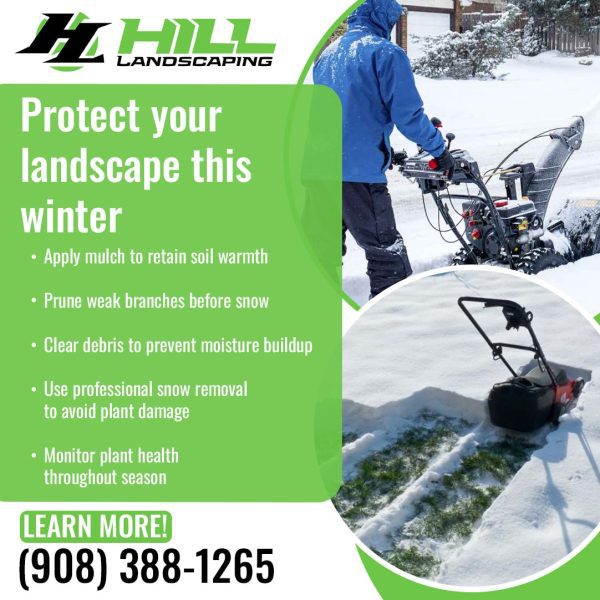
Transform Your Landscape This Winter
Hill Landscaping is ready to help you protect and maintain your outdoor spaces with expert landscaping, bed care, and snow management services in Flemington, NJ. Contact us today or call (908) 388-1265 to discuss your property and explore winter solutions tailored to your business or commercial property. Let’s keep your landscape healthy, functional, and visually appealing all season long.
